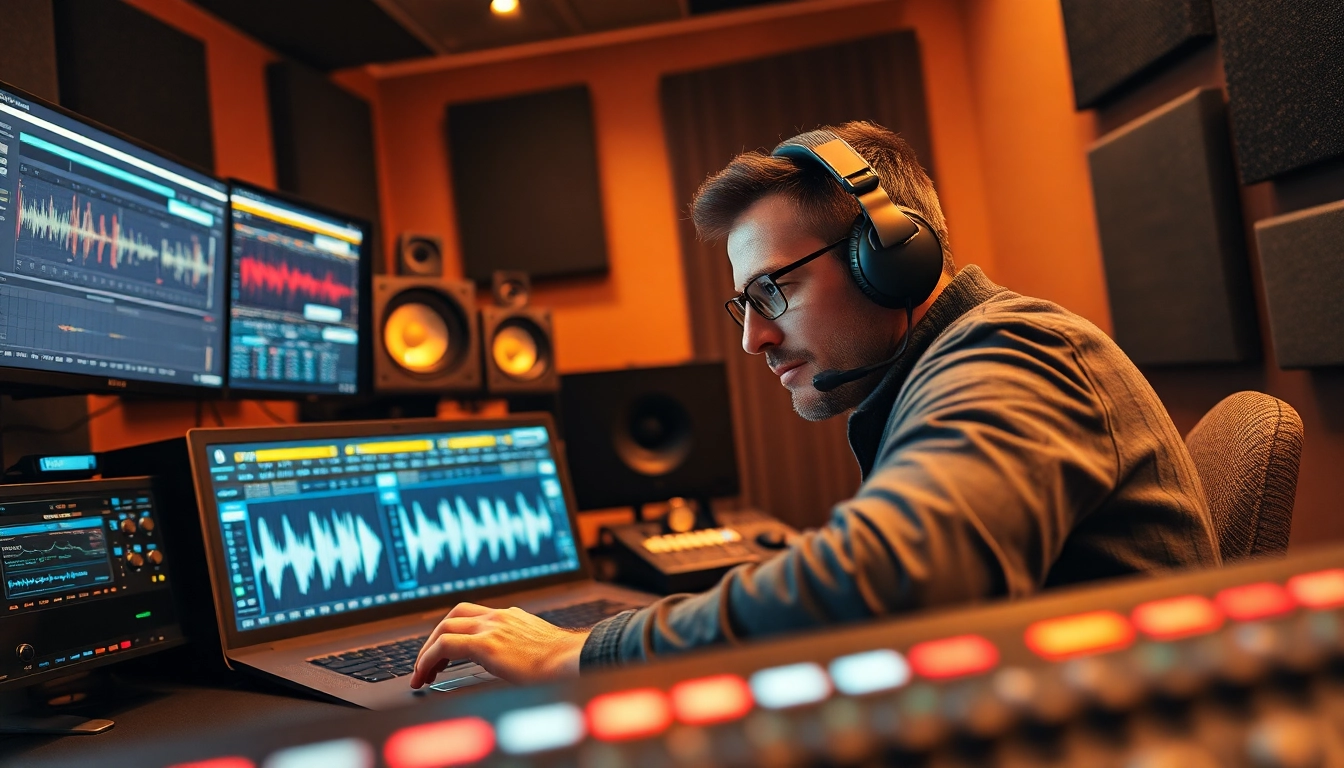
Understanding Online Mastering
What is Online Mastering?
Online mastering is the final step in the music production process, where a track is polished to attain commercial quality. It involves applying various audio processing techniques to ensure that the music sounds great across all playback systems, from headphones to professional speakers. Unlike traditional mastering, which usually takes place in a studio, online mastering is conducted through specialized digital platforms, allowing artists and producers to upload their tracks, which are then mastered by professional engineers remotely.
Benefits of Online Mastering
Online mastering offers numerous advantages that make it an appealing choice for artists, producers, and labels. One key benefit is accessibility; musicians can work with professional mastering engineers from anywhere in the world, which often leads to high-quality results at competitive prices. Additionally, online mastering services often have quick turnaround times, enabling artists to release their music faster.
Another significant advantage is the variety of services available. Many platforms provide tailored mastering options, accommodating different genre specifications and personal preferences. Furthermore, artists can take advantage of user-friendly interfaces that make the process seamless—from uploading tracks to receiving mastered versions. For those eager to enhance their sound without breaking the bank, online mastering can be a game-changer.
How Online Mastering Works
The process of online mastering generally involves several steps. Initially, artists or producers upload their tracks to a chosen mastering platform. Each service varies in features, but many include options for adjusting levels, compressions, and adding EQ. Once tracks are uploaded, they are analyzed for any sonic imperfections.
After the assessment, mastering engineers apply their expertise to enhance the sound quality, ensuring balance and clarity. Once the mastering is completed, the final track is rendered and made available for download or streaming. This efficiency makes online mastering a convenient alternative to traditional methods without sacrificing quality.
Choosing the Right Online Mastering Service
Factors to Consider for Online Mastering
When selecting an online mastering service, several factors should be evaluated. First, the quality of the engineers should be scrutinized; many services showcase their team’s qualifications and previous work, allowing prospective clients to gauge their expertise. Secondly, consider the platform’s technology. Some services utilize advanced algorithms for automated mastering, while others rely more on human expertise.
Pricing is another critical factor. Different services offer various packages, so artists should find one that meets their budget while ensuring high-quality results. Look for additional features such as genre-specific mastering options, stem mastering, and support for high-resolution audio formats, as these can significantly impact the outcome of your final audio product.
Comparative Analysis of Top Services
To make an informed decision, it might help to compare several online mastering services. Focus on the quality of audio output, the interface’s user-friendliness, and customer support ratings. Many mastering platforms also offer free trials or samples to showcase their capability. This allows potential users to test their services before committing. Thorough research can help differentiate the best options on the market, ensuring you make a choice that aligns not only with your technical needs but also with your creative vision.
Reading Reviews and Testimonials
Client testimonials and online reviews serve as invaluable resources when selecting an online mastering service. They provide insight into other users’ experiences, helping gauge the reliability and quality of a service. Look for patterns in reviews; positive feedback related to sound quality, customer service, and turnaround time can indicate a trustworthy provider. Conversely, repeated complaints could hint at underlying issues.
Always verify that reviews are from reputable sources, and consider reaching out to fellow musicians or producers in forums for personal recommendations. Engaging with the community can uncover genuine insights that are not readily available in formal reviews.
The Online Mastering Process
Initial Preparation for Online Mastering
Preparing your tracks thoroughly before submission is crucial for achieving the best mastering results. Begin by ensuring that your mix is the best representation of your sound. Limit the use of heavy compression during the mixing phase to allow the mastering engineer some headroom for adjustments.
Cloud storage or music production platforms should be utilized to manage and share files appropriately. Export tracks in high-quality formats, such as WAV or AIFF, and include any specific instructions or preferences regarding the final sound. This preparation phase not only streamlines the mastering process but also sets the tone for the final outcome.
Submitting Your Tracks for Mastering
After preparing your tracks, the next step is submission. Choose your preferred online mastering service and create an account if required. Upon entering the submission platform, you typically select the songs to master, along with any relevant metadata such as album art or titles. Many platforms also offer a feature to add comments or requests for specific outcomes.
It’s essential to follow the service’s uploading guidelines to avoid any unnecessary complications. Be sure to double-check all settings to guarantee you’re sending the correct versions of your tracks for the best final product.
Receiving and Reviewing Your Mastered Tracks
Once your tracks have been mastered, you will receive a notification, and the final files will typically be available for download. Listen to your mastered tracks on various systems—from studio monitors to earbuds—to ensure the quality holds across different platforms. Pay attention to elements such as loudness, clarity, and balance.
If any adjustments are needed, most services offer a revision policy, allowing you to request changes without starting from scratch. Utilize this opportunity to refine your sound and ensure that it meets your expectations before finalizing the release.
Enhancing Your Skills for Online Mastering
Essential Tools for Online Mastering
For those wishing to explore online mastering more deeply or even venture into self-mastering, several essential tools are available in today’s digital audio workstation (DAW) software. Tools such as equalizers, compressors, limiters, and analyzers are foundational for any mastering setup. Plugins from reputable brands can provide advanced functionalities that mirror professional studio tools.
Additionally, consider investing in high-quality studio monitors and headphones, as accurate listening is imperative for effective mastering. Acquiring these tools can improve not only your mastering techniques but also the overall quality of your productions.
Techniques to Improve Your Mastering Quality
Improving your mastering quality involves a blend of knowledge and practice. Start by leveraging reference tracks. Examine commercially successful songs similar to your style to identify effective mastering characteristics. This practice can guide your adjustments, ensuring you’re aiming for a competitive sound.
Furthermore, continuous learning is vital. Websites, courses, and tutorials provide insights into advanced techniques like mid-side processing, low-end control, and creating immersive stereo images. Implementing these strategies can contribute significantly toward enhancing your mastering skills.
Resources for Learning Online Mastering
Various resources are available for those keen on mastering their mastering skills. Online courses, video tutorials, and forums can offer instructional content, technical jargon decoding, and expert advice. Consider platforms such as educational websites that specialize in music production, offering both free and paid courses to suit different skill levels.
Books on audio engineering can also provide in-depth knowledge and historical context, further enriching your understanding of sound mastering. Joining online communities or social media groups can facilitate discussion with like-minded individuals and help maintain motivation through feedback and shared experiences.
Measuring Success in Online Mastering
Performance Metrics for Mastered Tracks
To gauge the success of your online mastering, establish clear performance metrics. These can include elements like loudness, spectral balance, and dynamic range. Many software tools now provide visual feedback, allowing you to compare mastered tracks with industry standards. Analyzing these metrics can provide insights into areas for improvement and help refine future mastering efforts.
Beyond technical measures, consider the reception of your track post-release. How does your audience react? Monitor engagement on streaming platforms and track feedback across social media to assess the emotional and artistic impact of your mastered music.
Feedback and Adjustment: What to Look For
Receiving feedback post-release is critical for continuous improvement. Pay attention to both qualitative feedback—such as listener reviews—and quantitative data, such as stream count trends. Look for comments related to clarity, depth, and overall satisfaction with the sound quality.
Be open to constructive criticism and don’t shy away from making necessary adjustments based on real-world responses. Client feedback can guide your future submissions to online mastering services, allowing you to refine your approach continually.
Continuous Improvement in Online Mastering
Online mastering shouldn’t be viewed as a one-time process; instead, perceive it as an evolving practice. Regularly update your skills by engaging with new techniques and technologies in the audio engineering field. Continuous learning will enhance your future projects and maintaining flexibility allows rigorous adaptation to industry trends.
Seek feedback consistently, not just from listeners but also from fellow musicians or industry professionals. Establishing a collaborative mindset can yield fresh insights and innovative approaches that can provide significant boosts in your mastering quality.
Frequently Asked Questions
What is the difference between mixing and mastering?
Mixing involves balancing individual audio tracks, while mastering focuses on finalizing those mixes for distribution, enhancing their overall sound for consistency across various playback systems.
How long does online mastering usually take?
The turnaround time for online mastering varies by service, but many platforms offer quick processing within a few days, with options for expedited services for urgent projects.
Can I master my tracks myself?
Yes, many artists use digital audio workstations and plugins to master their own tracks, but professional mastering often yields higher quality due to specialized expertise and equipment.
What formats should I submit for mastering?
Typically, WAV or AIFF formats are preferred for online mastering as they preserve audio quality. Avoid using compressed formats like MP3, which reduce sound fidelity.
Do I need to attend the mastering session?
Online mastering allows you to submit tracks remotely, so attendance isn’t required. Many services offer options to submit notes or preferences directly to the mastering engineer.